


Thrips in sweet pepper: protecting crops without compromising ventilation
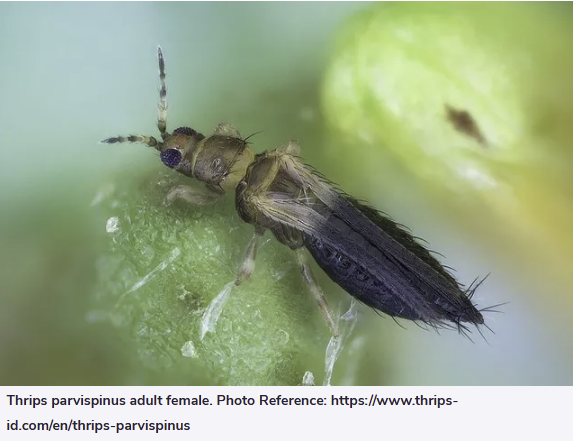
Pressure from Thrips parvispinus in Almería’s greenhouses highlights the importance of combining prevention, biological control and sound greenhouse design.
Insect screens help reduce pest entry, but they also restrict airflow. Installing a finer screen therefore means reassessing the greenhouse’s ventilation capacity.
Choosing a screen labelled “anti-thrips” is not enough: its aperture dimensions, porosity and airflow resistance all matter. Well-maintained cladding, sealed gaps and protected entrances are also essential.
How can reduced airflow be compensated for?
Options include increasing vent opening area, installing double roof vents or combining roof and side ventilation.
Span width also matters: widening a span while keeping the same vent opening reduces the ventilation area per square metre of growing space. Spans of 8 or 9.60 metres can therefore be a useful option, while wider spans require proportionately sized openings.
For warm conditions, technical guidance commonly uses 45–60 air changes per hour as an indicative design reference. This is not a constant requirement for sweet pepper: ventilation must be adapted to the climate, crop and greenhouse configuration.
At ININSA, we design structures, insect screens and ventilation together, so that pest protection goes hand in hand with a suitable growing environment.